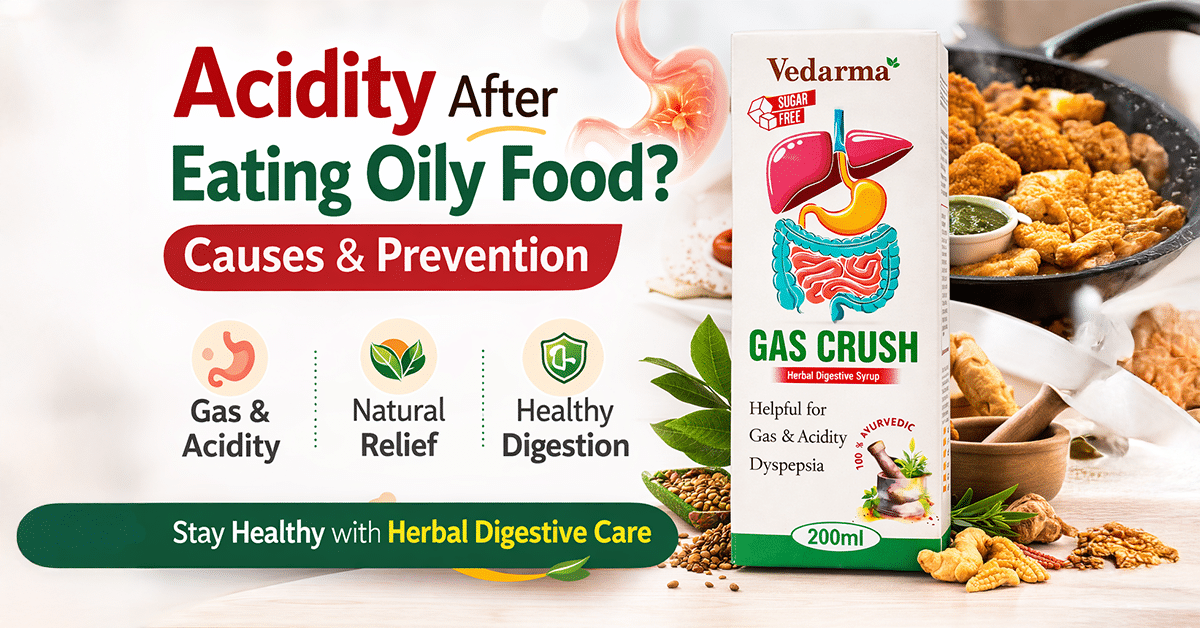
Acidity After Eating Oily Food? Causes & Prevention
Introduction
Have you ever finished a meal and felt a burning sensation in your chest or uncomfortable bloating? If so, you might be dealing with acidity after eating oily food. Many people struggle with this, especially after meals rich in fats or fried items. Understanding oily foods and acidity, why oily food causes acidity, and what you can do to prevent it can make a big difference in your daily comfort.
Why Oily Food Causes Acidity?
Oily food and fatty foods are delicious, but they can be tough on your stomach. When you eat them, your body takes longer to digest because fats slow down the digestive process. This can cause acid to rise into your esophagus, creating that unpleasant burning sensation in your chest.
Oily foods can also relax the lower esophageal sphincter (LES), the muscle that keeps stomach acid in place. When the LES doesn’t close properly, acid can flow backward, leading to heartburn and discomfort.

How Oily Foods Affect Digestion
Eating fried food or heavy meals can overwhelm your digestive system. Slow digestion from fatty foods can cause indigestion from oily food, bloating and gas, and even gas after oily food. The stomach struggles to process these foods, which is why you often feel heavy, uncomfortable, or gassy after indulging in greasy meals.
Foods That Trigger Acidity
Some foods that trigger acidity are well-known. They include:
1. Deep-fried snacks like pakoras, chips, and samosas
2. Rich, creamy dishes
3. Fast food (junk food and acidity are closely linked)
4. Greasy restaurant meals
5. Certain spicy sauces
These foods increase acid production and slow digestion, making it more likely that you’ll experience discomfort.
Common Oily Foods, Their Digestive Effects, and Tips to Reduce Acidity
| Oily / Fatty Food | Effect on Digestion | Tip to Reduce Acidity |
| Deep-fried snacks (pakoras, samosas, chips) | Slows digestion, causes bloating and gas, indigestion from oily food | Eat in small portions and pair with fiber-rich foods |
| Fast food / junk food | High fat content triggers acid reflux and burning sensation in the chest | Choose grilled options or limit intake |
| Creamy dishes (cheese, cream sauces) | Fat slows stomach emptying and may cause gas after oily food | Use low-fat alternatives or smaller servings |
| Greasy restaurant meals | Can relax the lower esophageal sphincter (LES), leading to acid reflux | Opt for baked or steamed dishes |
| Spicy sauces and condiments | Can irritate the stomach lining and worsen acidity | Use mild spices or avoid excessive quantities |
| Fried desserts (doughnuts, pastries) | High in sugar and fat; may increase acidity after eating oily food | Limit frequency and portion size |
Indigestion From Oily Food
Indigestion from oily food can appear as a variety of symptoms. You may feel:
1. Fullness even after eating a small portion
2. Pressure or discomfort in the upper stomach
3. Acid reflux or heartburn
This happens because the stomach takes longer to process fatty foods, and acid builds up, causing irritation and that uneasy feeling.
Gas After Oily Food
Gas after oily food is another common problem. Slow digestion allows food to ferment in your stomach, producing gas. This can lead to bloating, belching, and abdominal pressure. If this happens often, it’s a sign your digestive system is having trouble managing fatty meals.
How to Prevent Acidity After Oily Food
You don’t have to completely give up your favorite oily food. There are ways to enjoy meals while reducing the risk of acidity:
1. Watch Your Portions – Eating smaller amounts reduces pressure on your stomach.
2. Choose Healthier Cooking Methods – Bake, grill, or steam foods instead of frying. Healthy eating habits make a big difference.
3. Eat Slowly and Chew Well – Digestion begins in the mouth, so give your stomach a head start.
4. Pair Wisely – Combine fatty foods with fiber-rich vegetables or whole grains to help digestion.
5. Stay Upright After Meals – Avoid lying down right after eating; wait at least 2–3 hours.
6. Know Your Triggers – Keep a food diary to spot which oily food causes the most discomfort.

Natural Support for Digestion
Even with these precautions, sometimes indigestion from oily food still happens. That’s where natural remedies can help. Herbal digestive aids can calm your stomach, reduce bloating and gas, and help your body process food more comfortably.
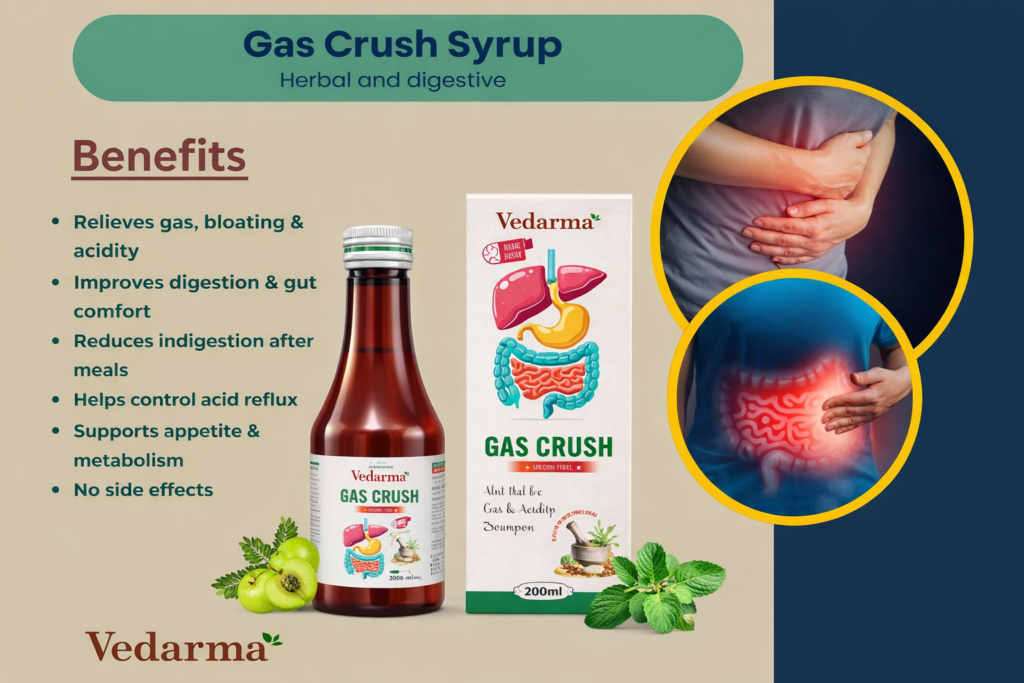
At Vedarma, we offer products specifically designed to support digestion. One standout solution is Gas Crush Herbal Syrup for Digestion, Gas, Acidity & Bloating Relief. This gentle, herbal syrup works to ease discomfort caused by oily foods and acidity, helping you feel lighter and more comfortable after meals.
Conclusion
Experiencing acidity after eating oily food doesn’t have to ruin your day. Understanding why oily food causes acidity, how fatty foods and junk food and acidity affect your digestion, and practicing healthy eating habits can make a big difference. Smaller portions, smarter cooking, and mindful eating go a long way in preventing discomfort.
For extra support when occasional acidity or bloating and gas strikes, Vedarma’s Gas Crush Herbal Syrup for Digestion, Gas, Acidity & Bloating Relief is a trusted choice. People who have placed their trust in Vedarma enjoy gentle, effective relief.
Explore our products today and feel the difference, BUY NOW for a happier, healthier digestive system!